How to turn your dreams into reality with AI?
How to turn your dreams into reality with AI?
Texas Hill Country Smart Ranch: Where Technology Meets Recreation
From Corporate Burnout to Ranch Dreams
Sarah left her tech job in London to build an organic spice farm in Tanzania. She knew agriculture. She knew business. What she didn't know was that a $600 Chinese soil sensor could have prevented the $50,000 crop failure in her first year. This story resonates with countless agricultural entrepreneurs worldwide who discover that modern farming success depends as much on smart technology as traditional knowledge.
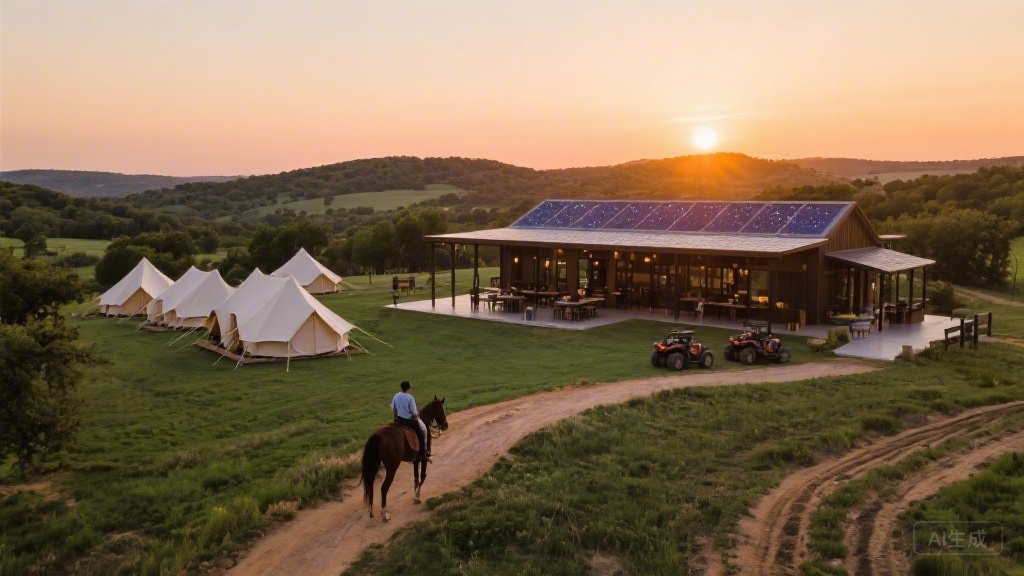
Today, we explore a different approach: the US-01 Texas Smart Ranch & Recreation, a Virtual Demo Farm that demonstrates how agricultural technology can transform a traditional ranch into a profitable lifestyle and entertainment destination. Explore in 3D to see how this Texas hill country property integrates smart farming with recreational experiences.
Strategic Location in Texas Hill Country
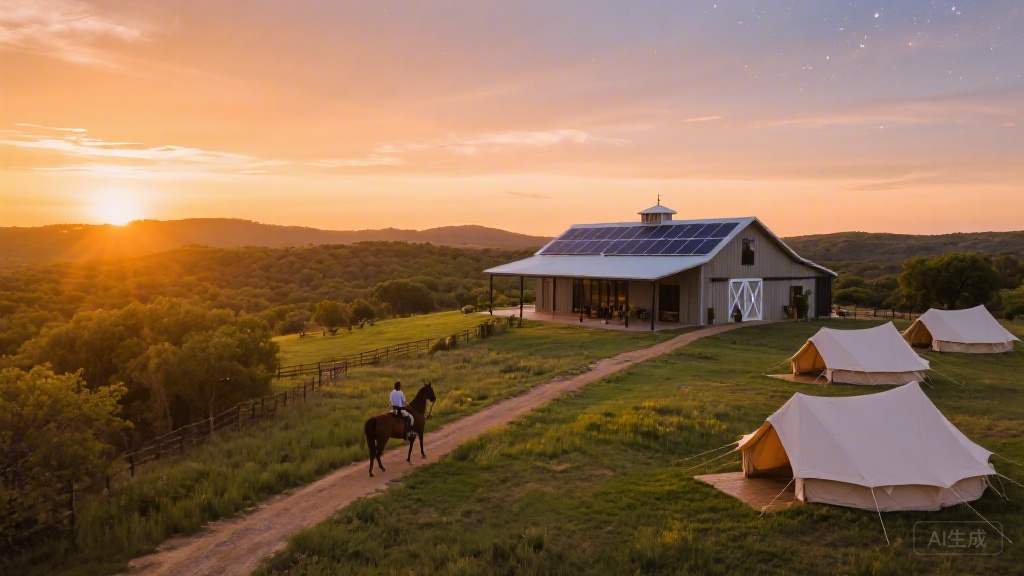
Located at coordinates 30.3512°N, -99.1487°W, this 400-hectare ranch sits in the heart of Texas Hill Country, approximately 80 kilometers northwest of Austin. The property boundaries form an irregular polygon spanning rolling limestone hills typical of the Edwards Plateau region, with elevations ranging from 380 to 450 meters above sea level.
This location was strategically chosen for multiple reasons: proximity to Austin's affluent population seeking recreational experiences, excellent highway access via US-290 and Ranch Road 1888, and the area's established reputation as a premier destination for agritourism. The terrain offers diverse microclimates and scenic vistas perfect for both livestock operations and visitor experiences.
Google Maps satellite imagery reveals the property's natural advantages: oak-covered hills providing livestock shade, natural springs feeding into seasonal creeks, and existing ranch infrastructure ready for smart technology integration. Explore this farm in 3D to see how the multi-point boundary encompasses both working ranch areas and designated recreational zones.
Climate Conditions and Agricultural Advantages
The semi-arid climate classification brings distinct advantages for this ranch operation. Annual rainfall averages 660mm, concentrated in spring and fall seasons, while summers typically see temperatures ranging from 21-35°C. Winter lows rarely drop below -2°C, creating year-round grazing opportunities for livestock.
This climate profile supports diverse agricultural activities: native grass pastures thrive during cooler months, while drought-resistant crops can be cultivated with supplemental irrigation. The region's limestone-based soils provide excellent drainage and mineral content, particularly beneficial for livestock bone development and native plant growth.
The low threat level assessment reflects the area's advantages: minimal wildlife conflicts (primarily white-tailed deer and wild hogs), low crime rates typical of rural Texas, and infrequent severe weather events. The greatest risks are periodic drought cycles and occasional flooding in low-lying areas near seasonal creeks.
Similar successful operations in the region include exotic game ranches, boutique cattle operations, and agritourism ventures, demonstrating the area's proven track record for diversified agricultural enterprises.
High-Value Livestock and Specialty Operations
This ranch's semi-arid climate and terrain create opportunities for premium livestock operations. Texas Longhorn cattle represent the flagship opportunity, with registered breeding stock commanding $3,000-15,000 per head, compared to $1,200-2,000 for commercial cattle. The breed's historical significance and tourist appeal align perfectly with the ranch's recreational theme.
Exotic game operations offer substantial returns, with axis deer, blackbuck antelope, and aoudad sheep thriving in this climate. Hunting packages generate $2,500-8,000 per animal, while breeding stock sales add continuous revenue streams. The Texas Parks and Wildlife Department's Managed Lands Deer Program provides additional income opportunities through wildlife management services.
Heritage breed poultry operations can yield premium returns, with rare chicken breeds selling for $25-100 per bird compared to $3-5 for commercial varieties. Guinea fowl and heritage turkeys provide both meat and agritourism experiences, particularly during holiday seasons.
Native Texas honey production leverages the area's diverse wildflower populations, particularly bluebonnets and mesquite blooms. Raw hill country honey commands $15-25 per pound in Austin's farmers markets, compared to $4-6 for commercial honey. Single-varietal mesquite honey can reach $35+ per pound in specialty markets.
The ranch's recreational focus also supports agave cultivation for artisanal spirits production, with mature plants selling for $8-15 each to distilleries, and the growing Texas spirits industry providing expanding market opportunities.
Ranch Owner's Vision and Inspiration
The ranch owners envision creating a "working ranch experience" that educates urban visitors about agricultural technology while generating sustainable revenue streams. Their inspiration comes from successful European agritourism operations that blend traditional farming with modern entertainment experiences.
Their primary goals focus on financial sustainability through diversified revenue streams: livestock operations providing base income, recreational activities generating premium margins, and educational programs building community connections. Safety remains paramount, particularly given the liability considerations of hosting recreational activities like horseback riding, archery, and ATV tours.
The owners express particular interest in demonstrating how AI-powered safety monitoring can transform traditional ranch activities, making them accessible to inexperienced urban visitors while maintaining authentic ranch experiences. They see this ranch as a model for other agricultural entrepreneurs seeking to diversify beyond traditional farming income.
Current 16-Dimension Performance Assessment
The ranch's current technology infrastructure shows mixed development across key dimensions:
Established Systems (Intermediate Level):
- powerGrid: 60/100 - Solar array with battery backup covers 60% of ranch power needs
- connectHub: 60/100 - Fiber internet to main facilities, cellular boosters for pasture connectivity
Developing Systems (Basic Level):
- smartFarm: 45/100 - Weather stations and soil sensors deployed, automation systems pending
- livestock: 45/100 - RFID tagging system operational, health monitoring being implemented
Planned Development (Early Stages):
- entertainment: 30/100 - Trail systems marked, safety equipment procured, AI monitoring planned
- education: 30/100 - Visitor center space allocated, VR equipment ordered, curriculum development started
- community: 30/100 - Social media presence established, partnership discussions ongoing
Non-Applicable Dimensions: Nine dimensions (ecology, safeGuard, resilience, aquaSystem, processing, storage, transport, waste, health) are currently scored as not applicable, reflecting the ranch's focus on livestock and recreation rather than crop production or processing.
Overall Average: 19/100 - The low overall score reflects the ranch's early development stage and focused approach on seven key dimensions rather than comprehensive agricultural operations.
The three biggest improvement opportunities are advancing entertainment safety systems, expanding educational technology, and strengthening community engagement platforms.
Smart Ranch Transformation Vision
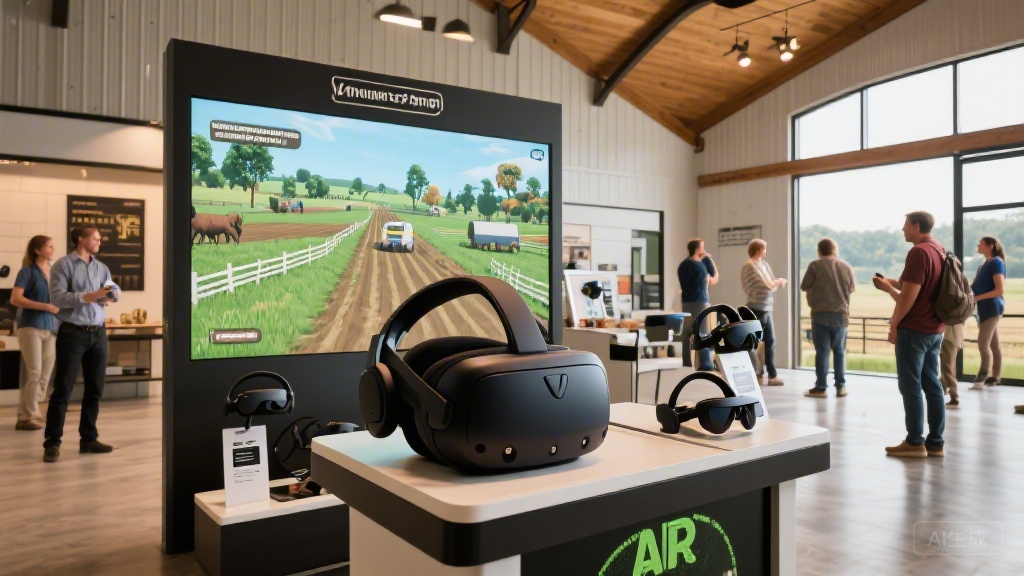
The ranch's evolution toward world-class status centers on integrating AI-powered safety monitoring across all recreational activities. Imagine visitors wearing smart wristbands that monitor vital signs during horseback rides, automatically alerting guides to fatigue or stress levels. Trail cameras with computer vision detect wildlife conflicts before they occur, while weather prediction systems automatically cancel outdoor activities when conditions become unsafe.
The Standard deployment preset best fits this operation, emphasizing visitor safety and educational technology over intensive agricultural automation. Priority upgrades should focus first on entertainment dimension safety systems, followed by educational VR installations, then community engagement platforms connecting visitors with ranch activities and local agricultural businesses.
Community co-builders are contributing ideas for everything from AI-guided star-gazing tours that automatically adjust telescope settings based on atmospheric conditions, to interactive farm demonstrations where visitors experience virtual cattle breeding decisions and see immediate financial modeling results. The ranch becomes a living laboratory where agricultural technology education meets entertainment.
Technology Deep-Dive: AI Safety Monitoring System
The ranch's flagship technology addresses the critical challenge of making traditional ranch activities safe for inexperienced urban visitors. Traditional horseback riding, archery, and ATV operations rely on guide experience and visitor honesty about skill levels – a combination that creates liability risks and limits market reach.
The AI Safety Monitoring System integrates multiple AustinEco technologies into a comprehensive visitor protection network. SafeGuard wearable devices monitor heart rate, movement patterns, and GPS location for every ranch visitor. Machine learning algorithms trained on thousands of hours of ranch activity data can predict visitor fatigue, detect falls within milliseconds, and automatically alert emergency responders.
Installation Process:
- Network Infrastructure: Install FiberLink high-speed connections to activity areas, with CellBoost repeaters providing 4G backup coverage across 400 hectares
- Monitoring Stations: Deploy WeatherEye environmental sensors every 500 meters, feeding real-time data on wind speed, temperature, and precipitation to central control systems
- Trail Technology: Install SmartCam units with computer vision along all riding trails, programmed to detect wildlife, weather hazards, and visitor distress signals
- Central Command: Configure RanchHub central monitoring system in visitor center, displaying real-time safety status for all ranch activities
- Emergency Integration: Connect AlertNet automatic emergency notification system to local EMS, with GPS coordinates and visitor medical information transmitted instantly
This technology transforms traditional ranch insurance from high-risk recreational activities to monitored, data-driven operations. Insurance premiums typically drop 30-50% when comprehensive monitoring systems demonstrate risk mitigation. More importantly, the technology enables the ranch to serve visitors with no ranch experience safely, dramatically expanding the potential market from experienced riders to urban families seeking authentic agricultural experiences.
The system's intelligence grows continuously, learning from each visitor interaction to improve safety predictions and customize experiences based on individual skill levels and comfort zones.
Equipment Shopping List and Specifications
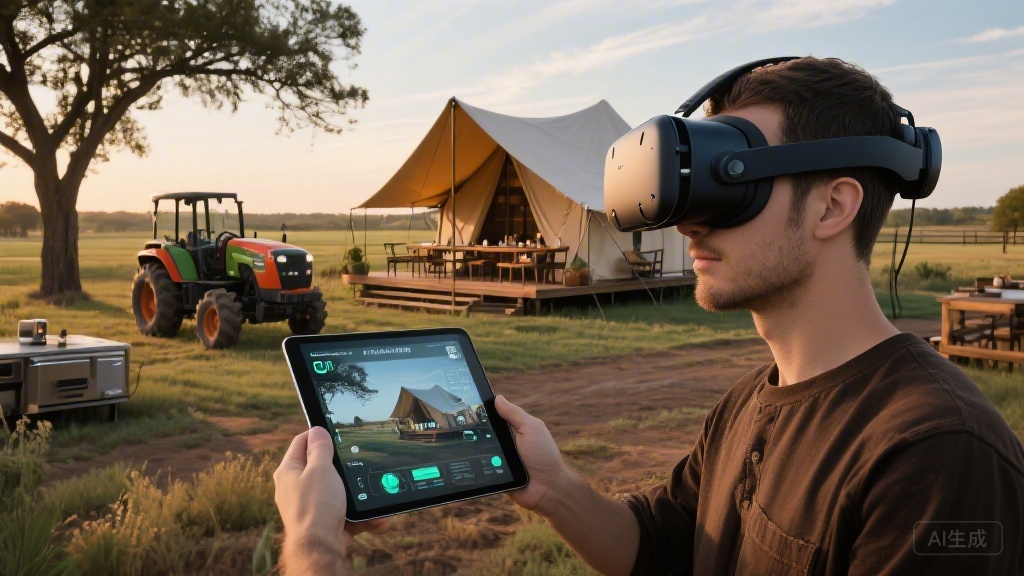
Core Safety Monitoring System:
- SafeGuard Visitor Wristbands (20 units): Heart rate, GPS, fall detection, 48-hour battery. China price: $85/unit vs. $340 Western equivalent. HS Code: 9102.11.80, Basic installation
- RanchHub Central Control System: 32-inch display, real-time monitoring software, emergency integration. China price: $2,400 vs. $9,600 Western. HS Code: 8471.41.01, Intermediate installation
- SmartCam Trail Units (15 units): 4K video, AI wildlife detection, solar powered, weatherproof. China price: $280/unit vs. $1,200 Western. HS Code: 8525.80.30, Advanced installation
Infrastructure Support:
- CellBoost Repeater Network (8 units): 4G signal amplification, 5km range, backup power. China price: $450/unit vs. $1,800 Western. HS Code: 8517.70.00, Intermediate installation
- WeatherEye Sensor Stations (12 units): Wind, temperature, humidity, precipitation monitoring. China price: $190/unit vs. $750 Western. HS Code: 9015.80.20, Basic installation
Total equipment investment: approximately $18,500 from China suppliers vs. $71,200 for equivalent Western equipment – a 74% cost savings that makes advanced ranch safety technology accessible to smaller operations.
SmartTrade Integration and Global Commerce
All ranch equipment procurement flows through AustinEco's SmartTrade platform, leveraging the 56-dimension supplier matching engine to identify optimal Chinese manufacturers for each technology component. The ranch owner benefits from pre-negotiated pricing, quality certifications, and consolidated shipping reducing logistics complexity.
The 22-node trade pipeline handles everything from initial supplier verification through final installation support. Typical lead times run 15-21 days for electronics, 30-45 days for solar equipment, with MOQ requirements often waived for demonstration farm projects. Airwallex integration provides real-time currency conversion and international payment processing, eliminating traditional import banking complications.
The ranch also becomes a potential supplier through SmartTrade, offering premium Texas Longhorn breeding stock, heritage poultry, and artisanal honey to international buyers. The same platform facilitating equipment imports can export ranch products to Asian markets where Texas agricultural products command premium pricing.
SmartTrade's agriculture vertical includes specialized services like livestock health certification, organic verification, and cold-chain logistics for perishable exports – transforming a traditional ranch into a globally connected agricultural enterprise.
Community Co-Building and Future Development
This Virtual Demo Farm evolves through community input and collaborative development. Current co-building initiatives include developing AI algorithms for predicting optimal wildlife viewing times, creating VR educational modules about sustainable ranching practices, and designing visitor experience workflows that maximize both safety and authenticity.
Three ways to engage: First, explore the ranch in 3D to understand current infrastructure and identify improvement opportunities. The interactive WebGL interface lets you examine equipment placement, terrain challenges, and visitor flow patterns.
Second, submit your co-building ideas through the community participation portal. Whether you're an agricultural technology expert, ranch operator, or urban visitor interested in agritourism, your insights help shape this ranch's development toward real-world implementation.
Third, use the GlobalHome configurator to design your own virtual ranch, exploring how different technology combinations perform under varying climate and terrain conditions. This ranch demonstrates one approach – what would YOU build here?
This ranch is evolving from concept to comprehensive demonstration of how agricultural technology transforms traditional operations into profitable, safe, and educational experiences. Your vision helps define its future.